NVIDIA RTX Spark laptops are out: 128GB of memory to run AI models on a Windows notebook
The first RTX Spark laptops from ASUS, Dell, HP, Lenovo, Microsoft and MSI went on sale October 16. NVIDIA's pitch: run large AI models and agents locally, without sending your data to the cloud.
By ScoviAI Team
Key points
- Available from October 16, 2026, from ASUS, Dell, HP, Lenovo, Microsoft and MSI
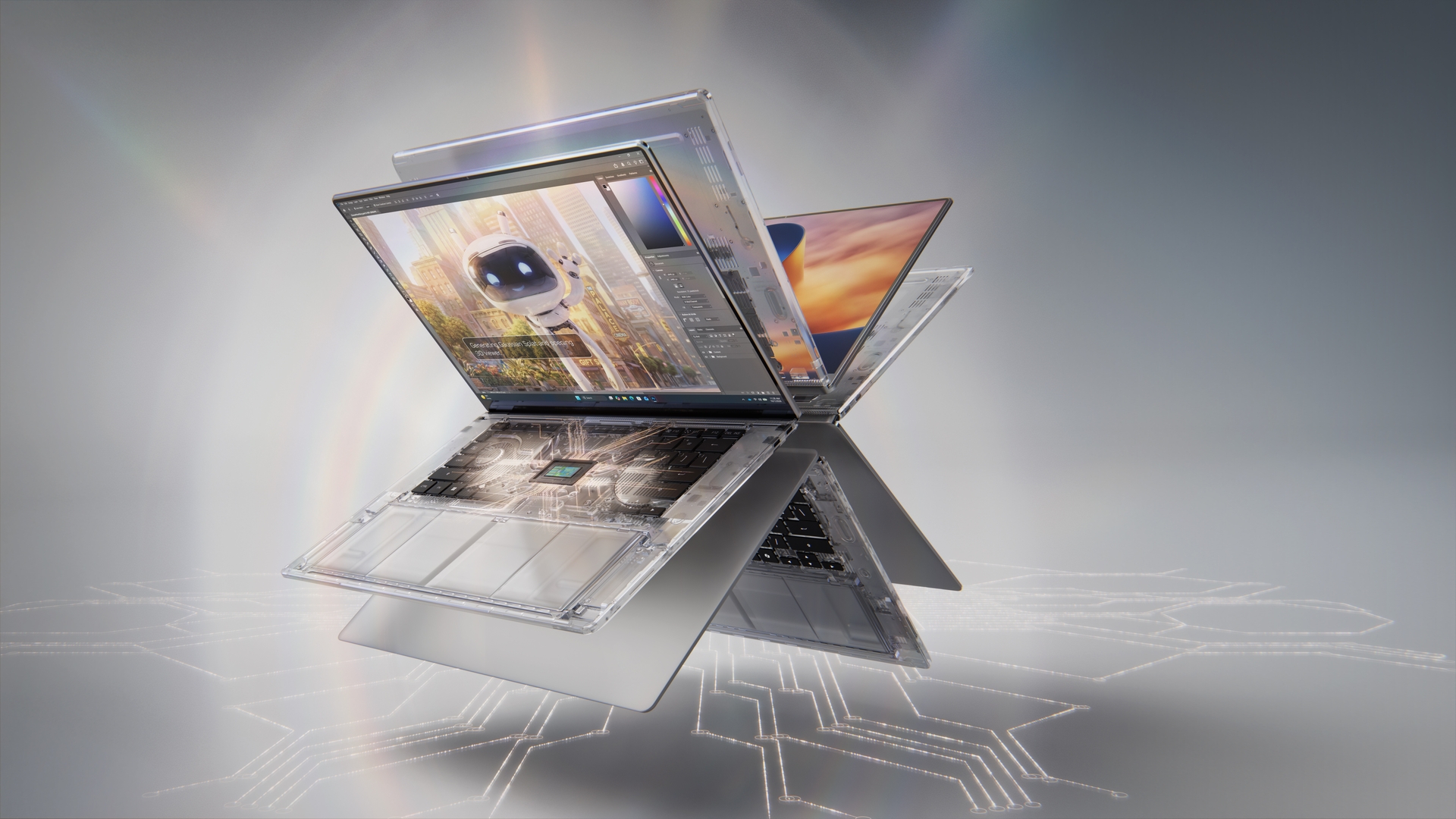
- One superchip with a Blackwell RTX GPU and a Grace CPU co-designed with MediaTek
- Up to 128GB of unified memory and up to 1 petaflop of FP4 AI performance
- Guided installers for local agents such as GitHub Copilot, Hermes, OpenClaw and Perplexity
Running a serious AI model usually means renting someone else's computer in the cloud. NVIDIA wants to put that power in a laptop bag instead.
RTX Spark laptops went on sale on October 16 from ASUS, Dell, HP, Lenovo, Microsoft and MSI, with more models promised. NVIDIA is selling them as Windows PCs for creators, gamers and, above all, people who want to run AI on their own machine.
What's inside an RTX Spark laptop?
The heart of the machine is a single "superchip" that combines two processors:
- an NVIDIA Blackwell RTX graphics chip,
- an NVIDIA Grace CPU, designed together with MediaTek for power efficiency.
The two share one pool of memory, up to 128GB, and NVIDIA quotes up to 1 petaflop of FP4 AI performance. Shared memory matters for AI because large language models need to fit in memory to run quickly. NVIDIA says that's enough to run frontier-class models locally, render 3D scenes larger than 90GB, and play big-budget games at 1440p above 100 frames per second.
These are NVIDIA's figures. Independent reviews will show how the laptops hold up on battery and under sustained load.
Local AI agents, set up without a command line
The more interesting part is software. NVIDIA says RTX Spark laptops ship with guided installers for AI agents, so you don't need to touch a terminal. Supported agents include GitHub Copilot, Hermes, OpenClaw, Perplexity, Pi and WorkBuddy.
"We brought Hermes to RTX Spark so people can put open AI models and agents to work locally on a Windows laptop, with greater control over their data." Dillon Rolnick, CEO of Nous Research
ADVERTISEMENT
NVIDIA is also releasing its own models tuned for these laptops, including Nemotron 3.5 Bolt, a 74-billion-parameter model built for tool use and multi-step tasks.
Why local AI matters
Running a model on your own laptop has three practical benefits:
- Privacy: your files and prompts don't leave the device.
- No per-use bill: once you own the hardware, there's no token meter running.
- Offline work: it keeps working on a plane or a bad connection.
The trade-off is that the biggest cloud models are still out of reach for any laptop, and premium hardware like this won't be cheap. NVIDIA hasn't published a single price because each manufacturer sets its own.
Microsoft is building Windows around the same idea, which it calls hybrid intelligence: run AI locally when it makes sense and in the cloud when needed. We cover that in Windows' bet on hybrid intelligence. If you're new to the open models that make local AI possible, start with open-weight AI models, explained.
Sources
ScoviAI Team is the ScoviAI newsroom. We write every article ourselves from the original announcements and link our sources. Spotted a mistake? Tell us and we'll fix it.
ADVERTISEMENT