MIT's paper-thin robot swims with living muscle cells that respond to light
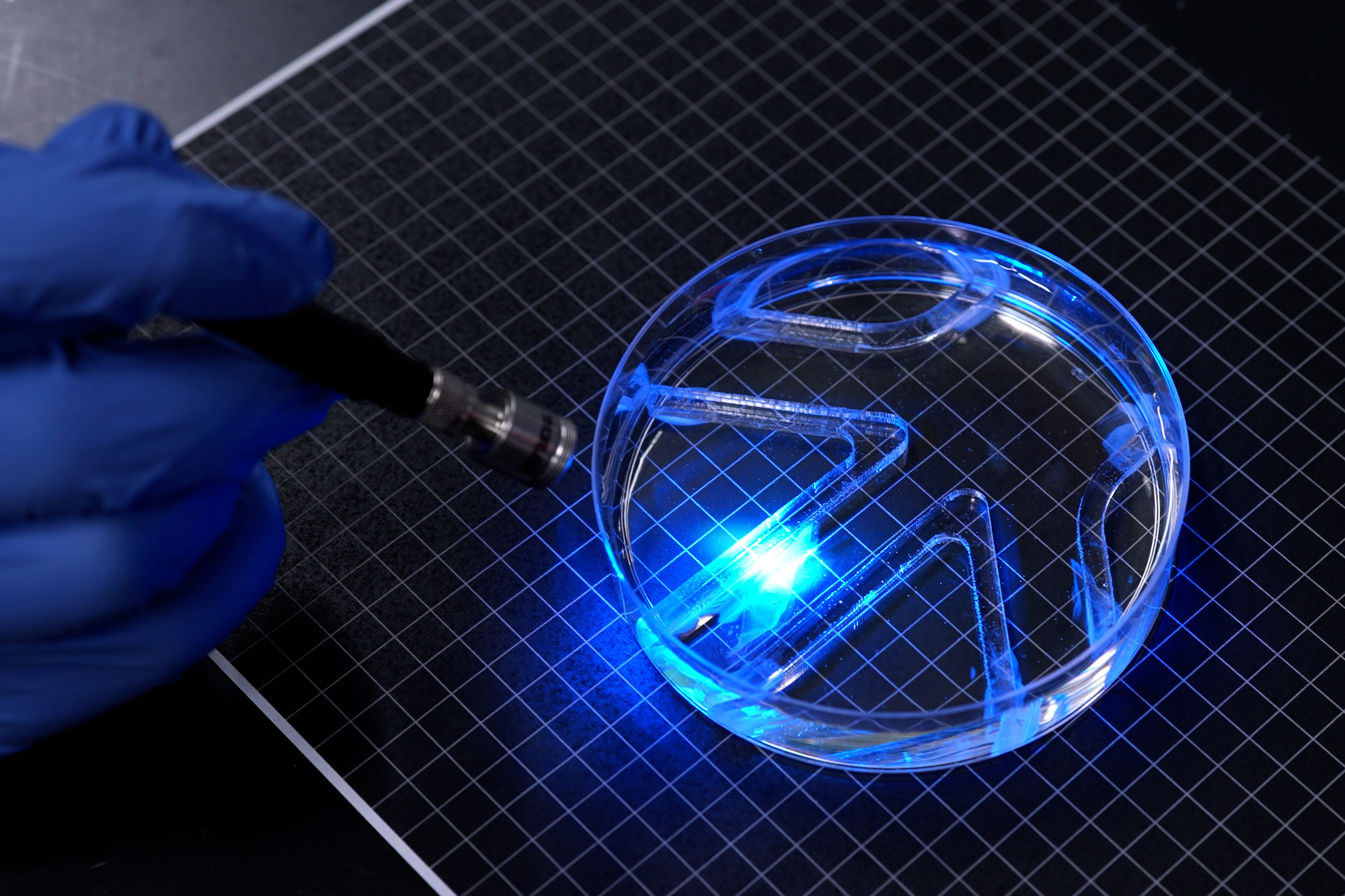
MIT engineers built a soft robot whose fins are moved by real, light-sensitive muscle cells. Flashing light on one fin or the other steers it through a watery maze.
By ScoviAI Team
Key points
- Published in Advanced Functional Materials on September 29, 2026
- The robot's body is a thin gel film; living muscle cells move its two fins
- The cells are engineered to twitch when light hits them, so light steers the robot
- It swims about four body lengths per minute
Engineers at MIT have built a soft, paper-thin robot that swims using living muscle cells. It's a step toward "biohybrid" robots: machines that use real biological tissue instead of motors.
The research was published in the journal Advanced Functional Materials.
How the robot works
- The robot's "skeleton" is a thin gel film, split into two halves that act as fins.
- Muscle cells grow on the fins. When the cells contract, the fins flap and the robot moves.
- The cells are genetically engineered to twitch when light hits them. Shine light on one fin, and that side moves.
By flashing light on one fin or the other, the researchers can change the robot's direction and speed, and they steered it through a small watery maze.
How fast is it?
Not very, yet. The robot covers about four body lengths per minute. For comparison, MIT notes that Olympic swimmers can manage up to 65 body lengths per minute. Speed isn't the point at this stage; control is.
Why build robots from muscle?
Muscle is soft, efficient and quiet, and it can make tiny, delicate movements that are hard to get from motors. The researchers suggest biohybrid robots like this could one day help with precision microsurgery or with exploring fragile environments where a hard robot would do damage.
Where it fits
This builds on years of muscle-powered robot research. In 2025, an MIT team reported artificial tendons that made muscle-powered robots stronger. This new robot adds something different: steering by light alone.
What it means for you
Nothing you can buy soon. Biohybrid robots are still lab experiments. But light-controlled muscle is a neat way to steer a living machine.
Sources
ScoviAI Team is the ScoviAI newsroom. We write every article ourselves from the original announcements and link our sources. Spotted a mistake? Tell us and we'll fix it.
ADVERTISEMENT